

LA London’s 2026 Forecast: Our Top 7 Trends in Prime Residential Design
2026 looks set to be another exciting year here at LA London. We’re looking forward to new projects and a renewed vision for LA London, both as a brand and as a business.
But what developments will we see in the wider world of architecture and design in 2026? A new year provides a welcome opportunity to reflect on the key innovations and trends generating excitement and discussion within the industry.
Here, LA London partners Kathryn Archer and Andrew Paulson share their top seven trend predictions for 2026, along with insights from Shona Patel, founder of leading interior design delivery studio SP3 London, and Morgan Beilby, founder and managing director of gym and wellness design specialists Velvaere Studios.




Kathryn Archer and Andrew Paulson of LA London; Shona Patel of SP3 London; and Morgan Beilby of Velvaere Studios
1. Adaptive Reuse Architecture
Our recent renovation project at the Menier Chocolate Factory reflects a renewed appetite for restoring and reusing old buildings, particularly those with historic and architectural significance. We refurbished this remarkable Victorian former warehouse, once a British outpost of French confectioner Menier, to create elegant new office space. The multi-use building is also home to venue hire spaces and an award-winning theatre.

The Menier Chocolate Factory building, extensively refurbished by LA London.
The latest UK planning policy, principally embodied in the National Planning Policy Framework (NPPF) increasingly embeds sustainability and whole-life carbon considerations into planning decisions discouraging unnecessary demolition of existing buildings and favouring reuse, refurbishment and retrofit.
As a result, we expect the demand for adaptive reuse architecture to gain further traction in 2026 as buyers and developers seek to repurpose and enhance the distinctive features of industrial sites and underutilised spaces, as well as heritage homes. As specialists in renovating and upgrading period homes in prime central London, we understand the importance of heritage conservation in maintaining the character of urban areas, as well as its environmental advantages and also celebrating the individual and unique historical detailing of an interior.
2. Five-Star Facilities at Home
A growing demand for hotel-level comfort in the home is likely to continue in 2026, as Shona Patel of SP3 London observes. SP3’s residential projects now feature “air-quality control, fine-tuned acoustics and integrated scenting” to create the ambience of a five-star hotel suite at home. “No-compromise” lighting includes “warm-dim LEDs, museum-grade spotlights and perfect shadow control”.

A typical wellness suite in a premium LA London project
When it comes to finishes, Shona is seeing a new demand for sensuality and softness, again derived from the world of hospitality. Materials include “honed marbles with soft edges and stone flutes for spa-like warmth” as well as luxury textiles such as alpaca, bouclés and soft wools.
Other design details include “radius joinery, curved niche shelving, scalloped wall details, and organically shaped furniture”, which create a feeling of completeness, softness, and comfort within the home.
3. Private Wellness Spaces
We anticipate a surge in the popularity of at-home wellness spaces in 2026, reflecting a renewed concern for health and longevity among HNWs.
Morgan Beilby of Velvaere Studios says, “As luxury wellness resorts and facilities establish new spatial, material, and sensory benchmarks, the end-users who experience these places will increasingly desire these environments within their own homes – driving demand for wellness and “healthspan” spaces that are architecturally integrated and designed as intrinsic, bespoke elements of the private residence rather than standalone amenities.”
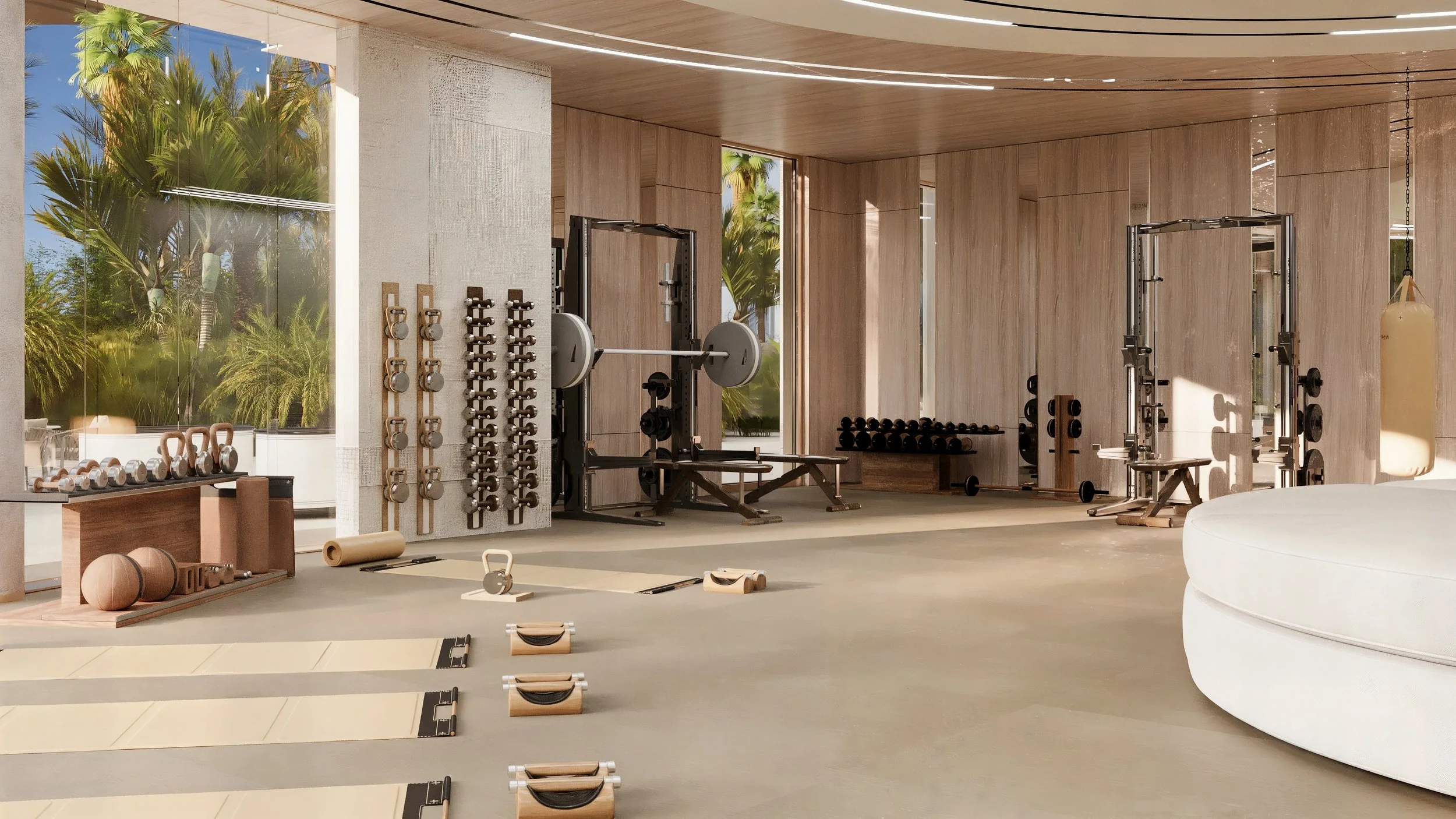
A custom gym in a private villa, delivered by Velvaere Studios
Shona Patel predicts “dedicated wellness suites, cold-plunge and sauna rooms”. To support these new features, her team is developing new standards for in-home wellness, including spa-like acoustics, integrated fragrance and lighting that supports circadian health.
4. “Elevated Minimalism”
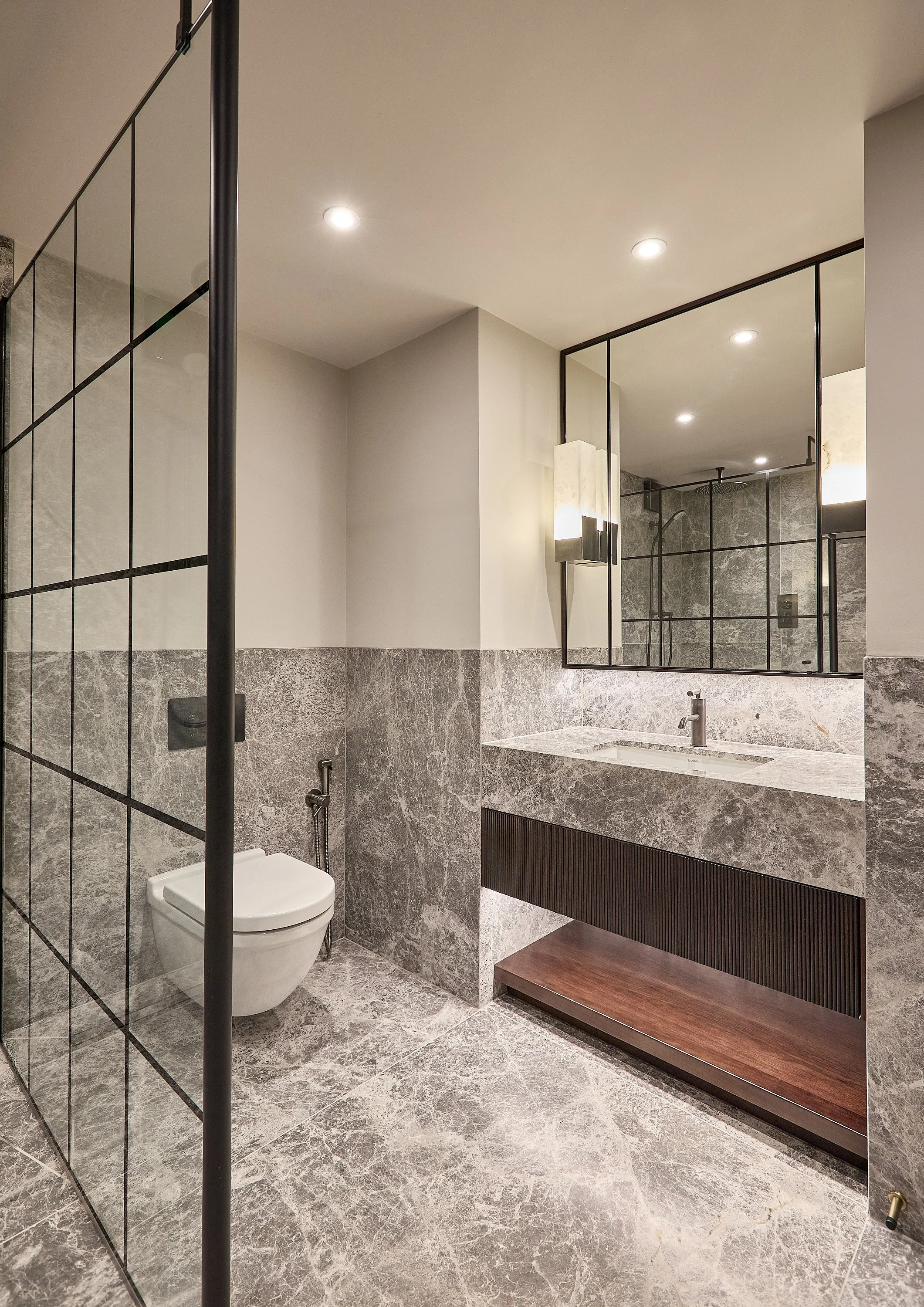
A bathroom designed by SP3 London
Less is likely to be more in 2026, with an aesthetic Shona Patel describes as “elevated minimalism” set to dominate both residential and luxury hospitality schemes. Simple, elegant design allows intricate detailing and craft to shine, with features such as “sculpted stone basins, hand-worked plaster, bespoke joinery details and artisan-made lighting” contributing to a feeling of quiet luxury.
Thoughtful, high-quality materials will also attain greater prominence: SP3 London now curates its own signature material library of stones sourced from boutique quarries, small-batch plasters, custom metals, and sustainable luxury textiles. High-end woods include fumed oak, walnut and eucalyptus, with HNW clients typically choosing hand-oiled finishes for natural depth.
Softer colour palettes will start to replace bolder colours, with earthy neutrals such as mink, warm stone, taupe and almond taking centre-stage alongside quiet greens and mineral blues. As part of this unshowy aesthetic, clients are also keen to conceal signs of technology in the home, choosing invisible speakers, integrated blind pockets and recessed light channels.
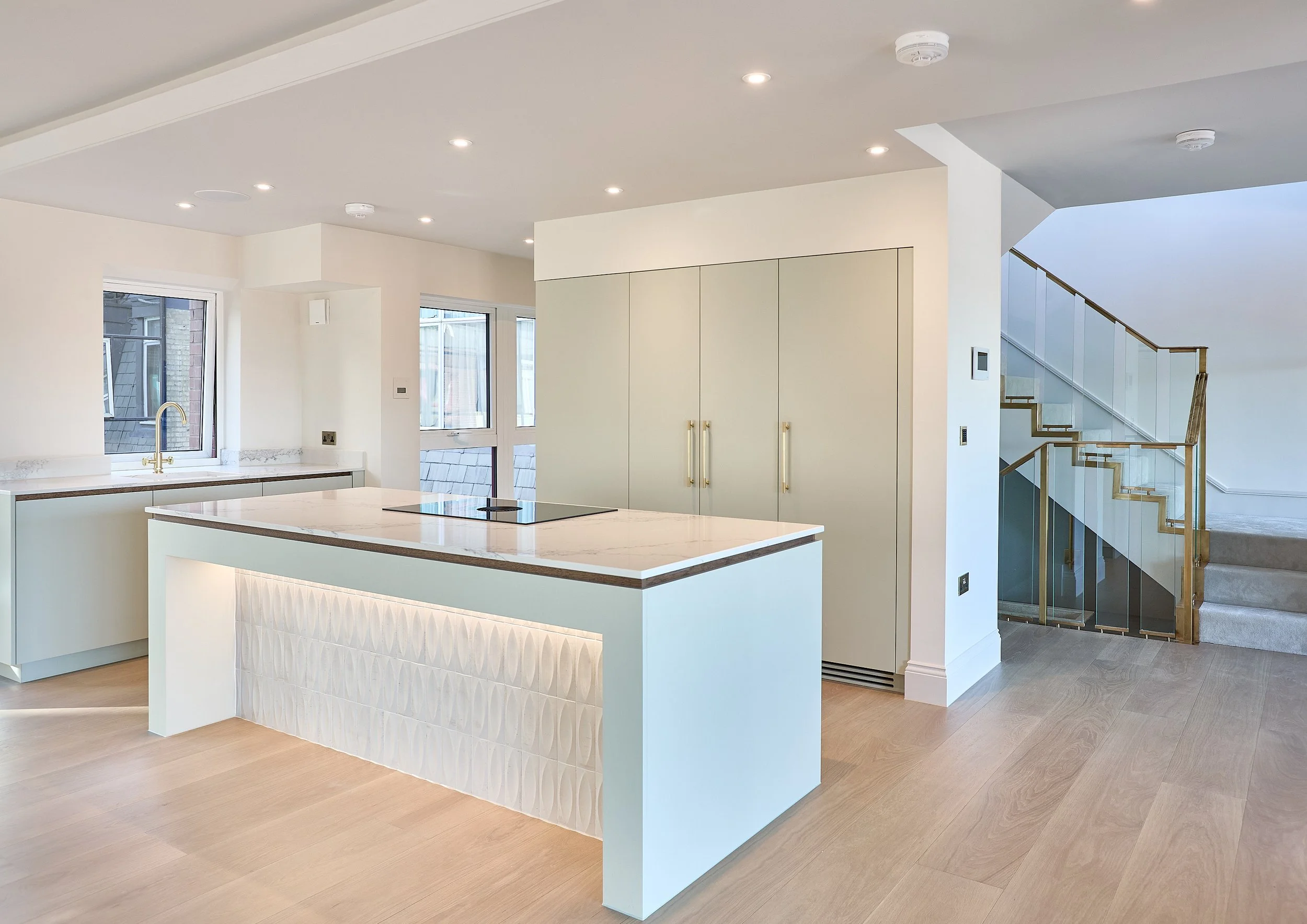
A kitchen designed by SP3 London
5. One-of-a-Kind Design
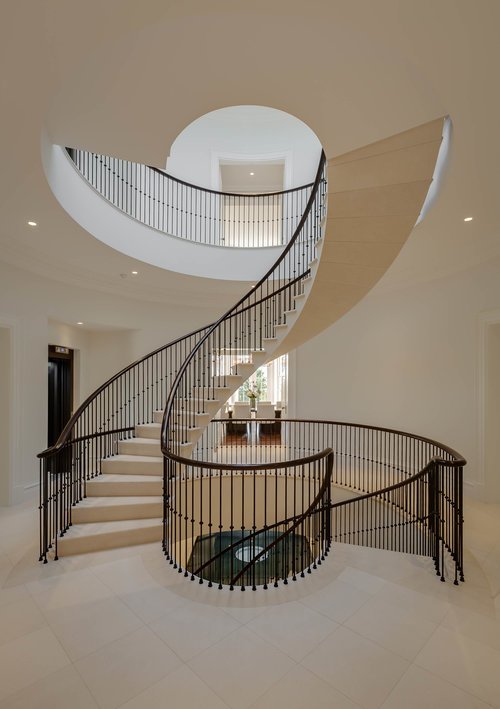
The “floating” helical staircase for our award-winning Camp End Manor project.
“True” prime residential design is more than just exclusive; it’s unique to each home, with HNW clients seeking out unique items, finishes and experiences that have been created specially for them. To cater for this demand, designers and architects are working more closely with specialist stonemasons, metalworkers, fabric artists, and timber specialists to deliver one-off pieces with an individual story.
The ‘floating’ stone staircase we designed with The Stonemasonry Company and Webb Yates structural engineers for our Camp End Manor project was one example of a singular design feature that transformed a space. Simple, beautiful and the first of its kind in a residential project, the solid stone helical stair allowed light to flood the lower floors of the home.
Bespoke design doesn’t have to be grand and impressive, however: according to Shona Patel, some subtle – but no less special – examples of signature detailing include inset stone thresholds, metal inlays in timber floors, custom fluted cabinetry and hand-rolled plaster coves.
At LA London we have found that some clients like to source special antique items that might be relevant to their background, interests or culture.
6. Bespoke Technology
We’re all familiar with the applications and benefits of smart technology in the home, and in 2026 we can expect to see this evolving to offer an ever more personalised approach.
“With rapidly evolving technology integrations, tailored experiences are more valued than ever,” Morgan says. “Furthermore, whilst function remains at the core, the design and aesthetics of these solutions are really coming to the forefront of the health and wellness industry.”
With advancements in AI, building management systems will become increasingly responsive to our clients’ needs, routines and habits, as well as to environmental conditions. Features might include heating and air-cooling systems that adapt to accommodate the preferences of individuals within the home, or windows that control light and temperature depending on the conditions outside.
In the coming weeks, we’ll be speaking to Chris Thorne from Imperium Building Systems Ltd to find out more about the potential of AI in BMS – watch this space!
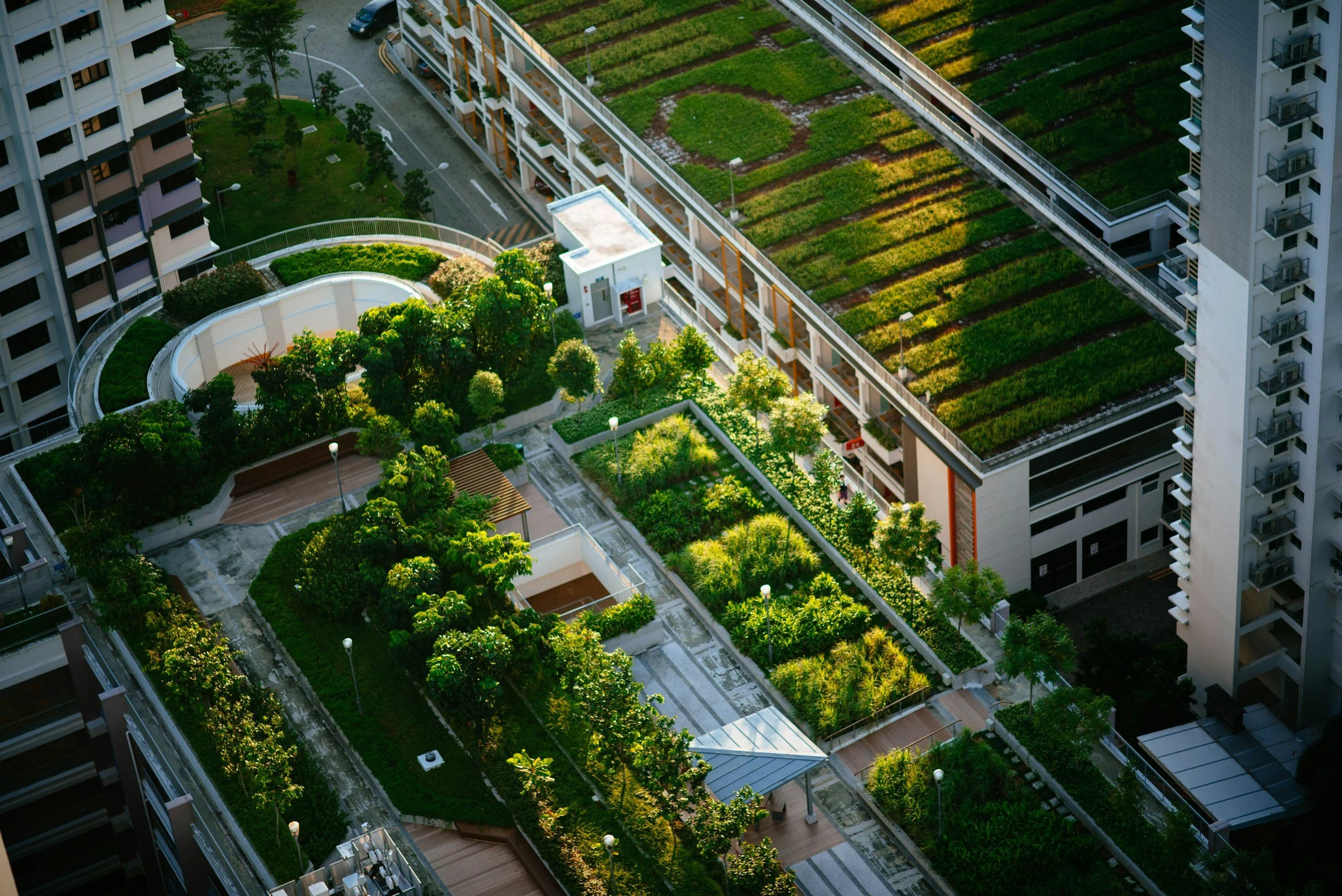
Green roofs on buildings in Singapore (Unsplash)
7. Regenerative Architecture
As we continue to drive sustainable practices through our membership of PRIME, we’re also working to attain B Corp status for LA London in 2026. This ambitious goal reflects our commitment to practising architecture that preserves and enhances its environment.
It has therefore been gratifying to see recent innovations in regenerative architecture, which aims to restore and regenerate ecosystems. Carbon-negative buildings can now produce more energy than they consume, using advanced techniques to harness solar and wind power. Living walls and green roofs also enhance biodiversity, while closed-loop systems preserve precious water resources.
.
Learn more about LA London’s award-winning residential, workplace and hospitality projects, or contact us to discuss a project.