

The strength of The LA Way lies in the people who deliver it, and we’re proud of the talented and dedicated team behind our work. Our appointment to several prestigious new projects this year has enabled us to grow the team at LA London, bringing fresh expertise, perspectives and ideas to the studio.
Everyone at LA London contributes to a positive, supportive culture that enables us to do our best work. We are equally committed to professional development at every career stage, from supporting graduates through their RIBA qualifications to providing regular CPD sessions, mentoring and networking opportunities.
Understanding our clients’ priorities
Our approach begins with understanding our clients’ priorities and helping them make informed decisions about sustainability.
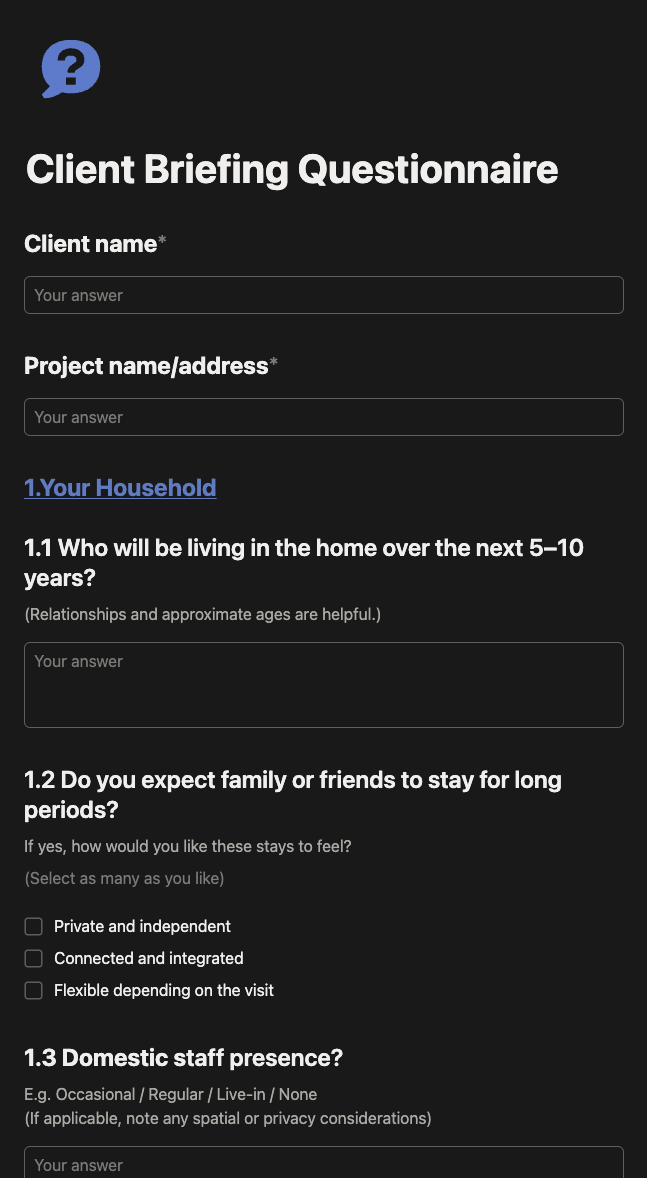
Our client briefing questionnaire asks which aspects matter most to them: energy efficiency and running costs, natural materials, reuse and restoration, longevity or reduced waste. Where clients are unsure, we explain the options and their implications for the project.
These conversations help us identify where we can make the most meaningful difference. They allow us to consider sustainability alongside design quality, comfort, budget and the practical demands of everyday life from the outset.
Preserving and adapting
Working with existing, often historic, buildings offers opportunities to retain valuable materials, extend their useful life and preserve the qualities that make a property distinctive.
Our experience working with listed buildings, homes in conservation areas and private estates has given us a detailed understanding of how to preserve historic character while adapting properties for contemporary life. Working constructively with local planning authorities, we seek to protect original features and retain existing fabric while sensitively improving comfort, performance and longevity.

Careful space planning can also help clients make more of the buildings they already have. At a recent project on Wilton Crescent, we created additional usable internal space by enclosing a central lightwell and introducing a rooflight over its lowest level. We also renovated an existing timber conservatory rather than replacing it.
Our specifications encourage contractors to reuse or repurpose materials removed during refurbishment. On one recent project, for example, we specified that rooflights installed only two years earlier should be retained for reuse or repurposing.
The right approach depends on the building and its setting. Our residential projects have incorporated a 10,000-litre rainwater harvesting system for garden irrigation at a home in St George’s Hill, a biomass boiler supplied by an estate’s annual coppicing yield, and a reed-bed wastewater treatment system at another rural property.
Making informed material choices
Material selection provides another opportunity to reduce a project’s environmental impact. Alongside appearance and performance, we consider durability, maintenance, sourcing and opportunities for reuse.
Architectural Assistant Susannah Howlett manages our materials library, reviewing the environmental credentials of products and systems and recording information in an internal database. Our scoring system helps us compare available evidence, identify questions for suppliers and make better-informed specification decisions.
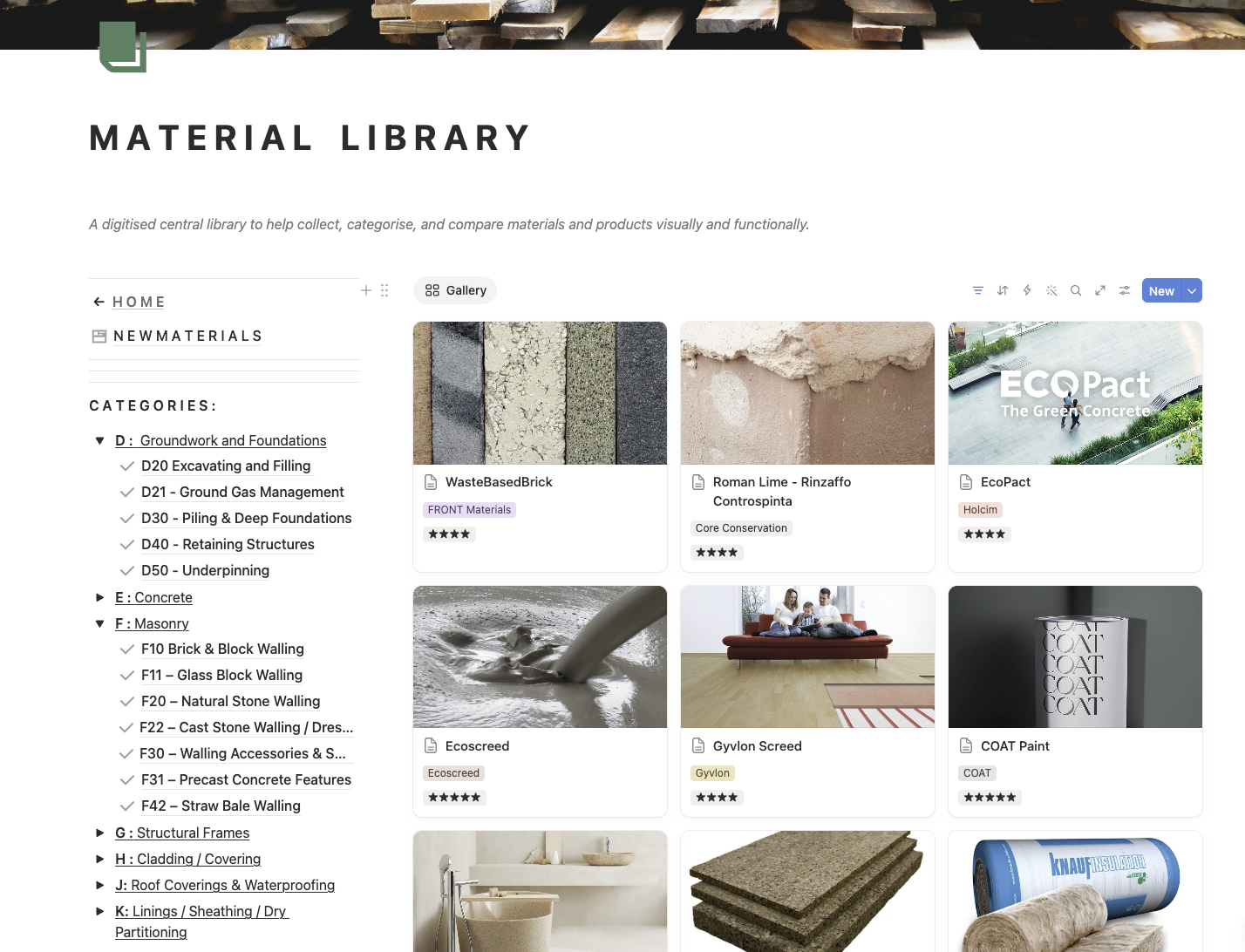
Our established network of suppliers and collaborators supports this work. Conversations with specialists help us understand the breadth of materials and products available and assess their suitability for each project.
We continue to explore new materials and methods, considering their environmental credentials alongside their ability to deliver the quality and longevity our clients expect.
Learning and improving
Since 2023, LA London has been a member of PRIME, a platform for businesses committed to the environment, their communities and greater accountability. Each year, we assess our progress against its six principles, identifying practical opportunities to improve.
Ongoing learning supports this process. Our sustainability manager, Mai Smith, recently completed a carbon literacy course, developing her understanding of climate change and the actions businesses and individuals can take to reduce emissions. She shared what she had learned with the team to help inform changes within the practice.
Mai also attended a seminar on sustainable certification, from ISO standards to B Corp. We are now working towards B Corp certification, using the assessment process to strengthen our policies and practices.
Putting principles into practice
Our approach to sustainability extends to the day-to-day running of the LA London studio.
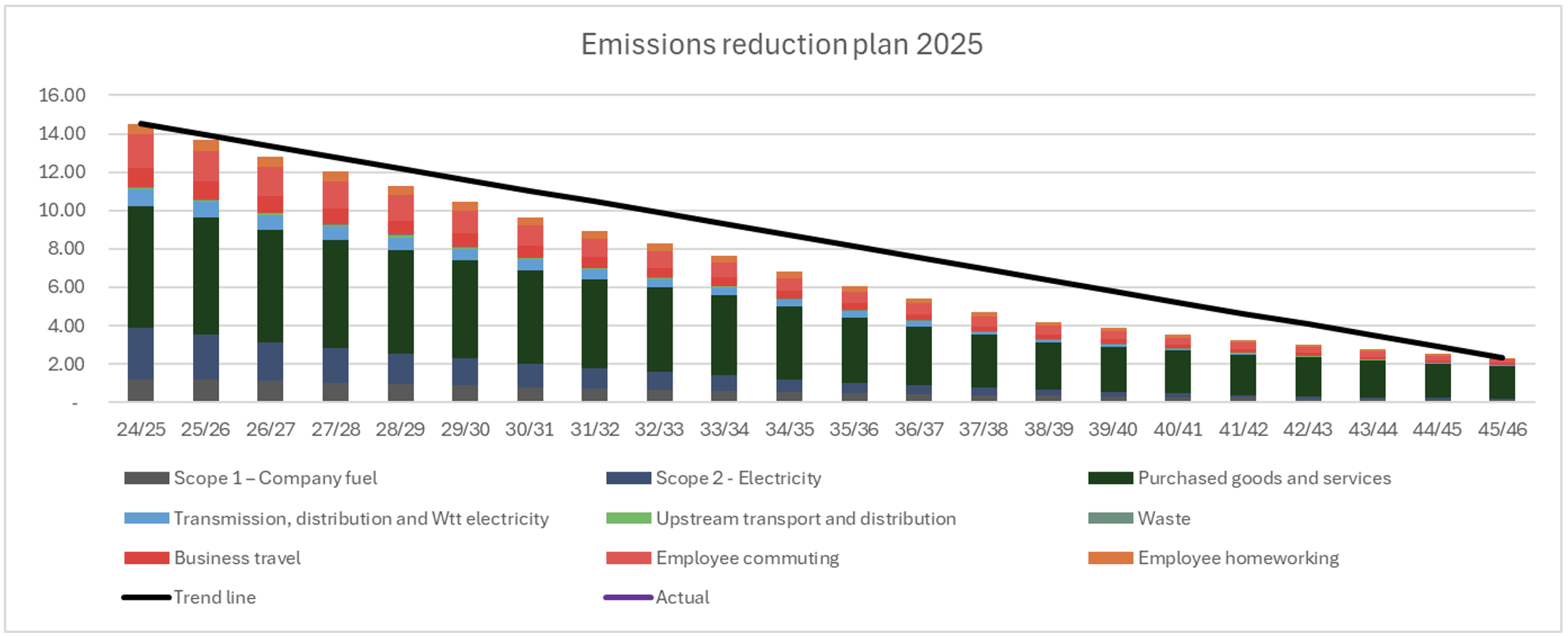
With help from Better Bankside, we have been working with sustainability consultants Sustainable X to better understand our carbon emissions. Their modelling and training have helped us improve the quality of our data and develop a carbon reduction plan to guide future action.
Over the last two years, we have introduced separate collection of paper towels and food waste for recycling and reviewed all of our purchasing choices. We share weekly figures for paper use, electricity consumption and waste and recycling sack usage at our weekly team meetings, keeping progress visible, making us accountable and facilitating discussions of where further savings might be possible.
We have also introduced the Cycle to Work scheme to support more sustainable commuting. In 2026, managing partner Andrew Paulson travelled to MIPIM in Cannes by train rather than plane, reducing the emissions associated with the journey and in 2027 Mai Smith will be cycling!
Quality that endures
We believe longevity is luxury. A well-designed home should offer lasting quality, adapt to changing needs and remain valued for generations.
For us, sustainability means making thoughtful decisions today that help buildings endure tomorrow.
Read more about our PRIME membership or get in touch to discuss how our enduring True Prime® principles can be applied to your next project.