The Role of BMS in Environment Building
Sustainable design remains central to our work at LA London, and we’re continuously seeking ways to incorporate energy efficiencies into the design process as early as possible. Integrating appropriate and effective Building Management Systems (BMS) from the outset has major benefits, both for the environment and for our clients.
LA London Managing Partner Andrew Paulson spoke to Chris Thorne, Director of Imperium Building Systems Ltd, about the interplay between BMS and architecture and the challenges around integrating BMS at an early stage. Here are some of the key discussion points they covered:


Andrew Paulson (L), managing partner at LA London, and Chris Thorne, director at Imperium Building Systems Ltd.
On early conversations
Andrew Paulson (AP): BMS integrates with so many parts of a building, it can have a big impact on how we plan aspects of the project. How do you approach the challenge of being asked to join a project at a late stage?
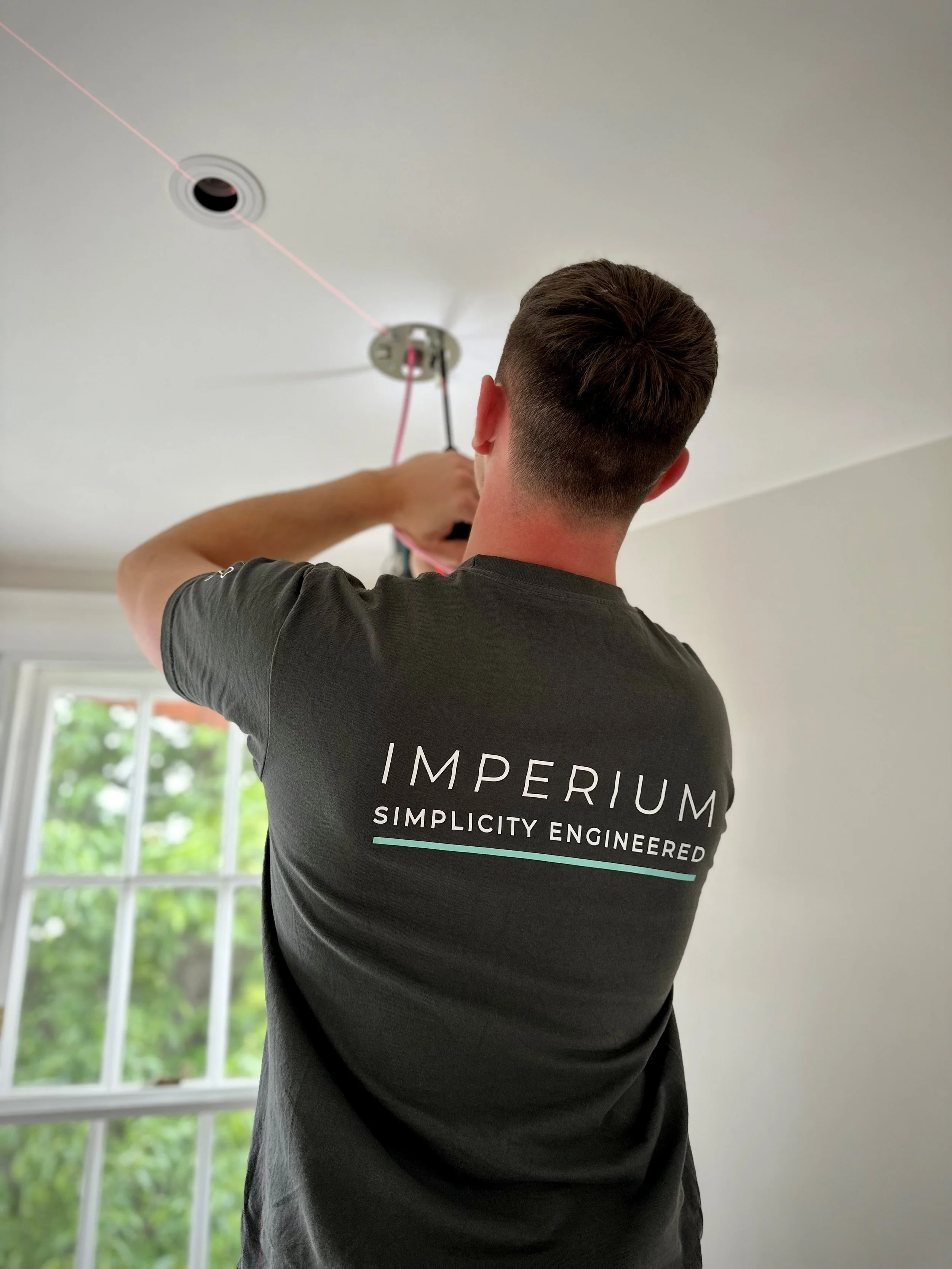
Chris Thorne (CT): BMS and control system specialists need to be brought into design conversations as early as possible. Unfortunately, we’re normally engaged too late in the process, which can often become an aggressively cost-driven exercise rather than looking at what the project really needs. To mitigate this we work very closely with leading M&E consultants who specialise in residential projects and this helps close the coordination gap, but so much of what we do leans into the client experience. I’d argue that we should be included in the very earliest design and coordination discussions, ideally with the client and client team.
AP One of our specialisms at LA London is taking over failing projects and getting them back on track. Our job when we’re first introduced to a project that is in distress is to unpick what’s happened and work out what needs to be done to get it delivered as quickly and efficiently as possible.
We normally have to take a couple of steps back to take a giant leap forward, putting together a strategy to get back on track and getting the client’s buy-in.
CT. Absolutely. Nothing’s impossible, but a lot of the services we offer at Imperium depend heavily on well-designed and appropriate M&E infrastructure being in place. If infrastructure is in and walls are closed up, that makes our lives more difficult, and ongoing maintenance also needs to be considered. Just like your car, BMS and HVAC needs regular servicing, and you’d be surprised how often something as obvious as how to access these critical systems is not thought about either. Cutting through expensive joinery to access a fan coil valve is never ideal.
People think that BMS can fix poor M&E design, which it can’t. What goes in behind the scenes is really important.
On asking the right questions
AP Do you have a standard briefing document or questionnaire you use for your clients and projects?
CT Yes – we’ve developed a questionnaire for clients for our AV and smart home services. We go into granular detail to ensure we understand how they use the space and how they want to interact with their home, how many people live there, whether they work at home or have children for example, that kind of thing.
AP We do similar: “How do you live your life, how many children do you have?”. It occurs to me that we need to make sure we’re asking the right questions on your behalf early on too so that when you come in you can pick it up and we don't have to revisit earlier decisions.
CT Yes, absolutely. If we’re brought in under a main contractor or, more typically, a mechanical contractor for BMS and HVAC, we don’t have the luxury of going through that process. We’re working to a design brief put together by an M&E consultant.
One of our biggest challenges on BMS projects is that we rarely have the ability to sit down with the actual people who will be living in the house. We’re designing a scheme based on a mechanical specification but have no real understanding of how the client wants to interact with their home and control it.
AP As architects, we need the key questions from you to ask early on.
CT If that’s the only thing that comes out of this conversation, I feel like I’ve arrived! We’ve been asking the industry for this forever.
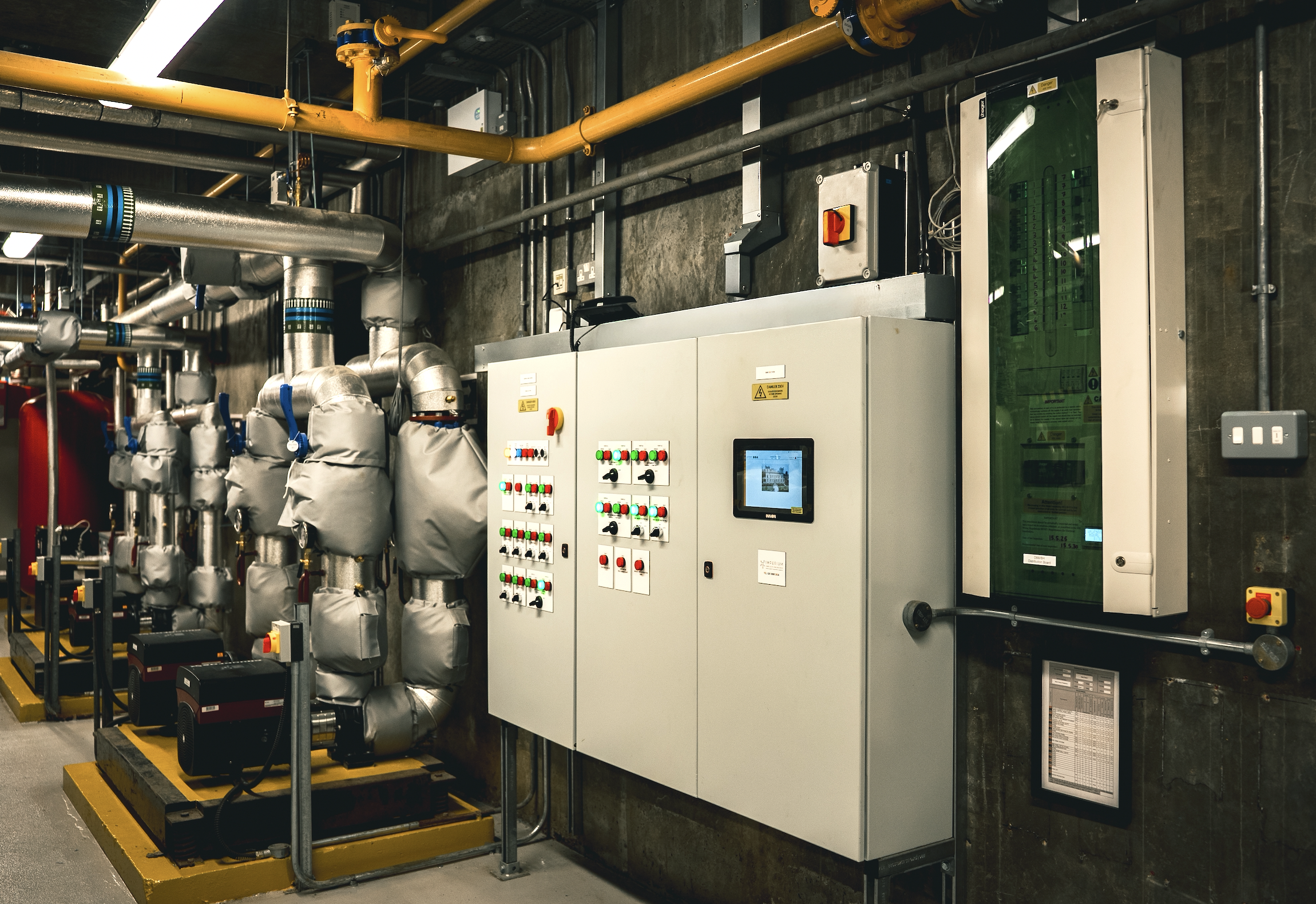
A BMS panel manufactured by Imperium installed in a plant room
On luxury vs. sustainability
AP In our questionnaire we’re also trying to understand what our client’s sustainability ambitions are. Often the response is, “I’ll do it if it doesn’t cost more money,” or at least if it pays for itself over a relatively short term. The bottom line is always a factor. It’s rare that anyone is willing to throw money at it.
CT Sustainability is one of the biggest selling points around BMS, which in a commercial setting typically controls around 60-80% of the energy consuming plant and systems.
There’s no reason why this shouldn’t also apply in a luxury residential capacity. What’s interesting is that we have considerable scope to build in intelligent optimisation that could have a huge impact on the property’s carbon footprint and long-term sustainability.
Historically people were far less concerned about their energy bills and were solely interested in comfort and convenience. Significant properties are often controlled and maintained at unnecessary comfort levels given the infrequency of owner occupancy. That’s starting to change, however, and clients are becoming more aware. We’re definitely seeing a shift away from “luxury tech” like cinema rooms and more investment in renewable energy sources and control systems. But there’s still often a missed opportunity to drive down costs and energy consumption further by bringing the BMS specialist into the core design team.
AP Many of our clients are too busy and have too many things going on to focus on the sustainability question in detail, which is why they employ people like us. That’s why we ask at the beginning of a project what their feelings are on a sustainable agenda so we can tailor our approach and they can trust us to deliver it for them.
You’ve got to really interrogate the kind of environment the client wants because it has a big impact on the systems and size of kit required. The client might not understand the knock-on effects of certain design elements and requests.
“Sustainability is moving higher up the agenda, but the human experience still has to remain central to the process.”
CT Yes, agreed. For example, a huge glass facade will make it tricky to regulate temperature if the sun is streaming through. All these coordination conversations can have an impact on control systems and sustainability.
Sustainability is moving higher up the agenda, but the human experience still has to remain central to the process.
On AI

CT This won’t come as a surprise, but AI will drive the biggest innovations in BMS. Properties and buildings will soon become “self-tuning”, and though we’ve always had what we call ‘control loops’ that constantly monitor and adjust the performance of heating and cooling systems, this was at a more localised and constrained level. Now AI can analyse data at such an extraordinary level that it not only optimises comfort and sustainability but also identifies issues in the system long before any human would be aware of them.
This is becoming a powerful tool in asset and property management in particular where, for example, you can be alerted to a pinprick leak in a pipe and repair it at minimal cost before it causes potentially devastating damage to a multi-million-pound property.
AP If we can optimise how we use energy based on an AI learning system that recognises subtle nuances in timings or temperature changes and anticipate that there’s going to be a higher draw on the energy – that’s proper intelligent use of technology. That’s what I want to see more of. It doesn’t matter how green the energy source is – you still don’t want to waste it.
On fear of technology
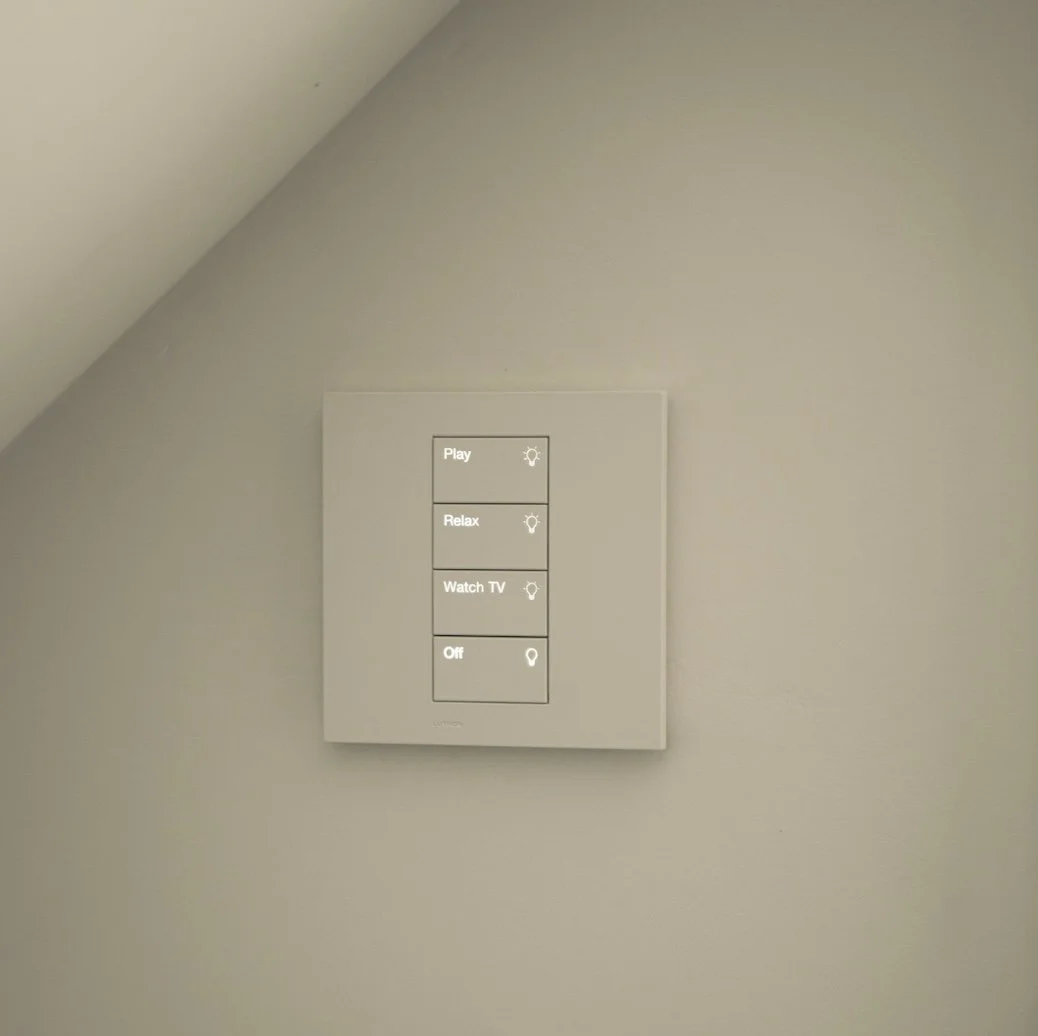
CT: When people say they don’t want a BMS or AV system because it’s "too complicated or expensive, that means the process has broken down somewhere. These technologies are so advanced now that when they’re properly embedded into the design, they should almost become invisible. Comfort, convenience, sustainability – it should happen in the background, with all systems integrated and controlling seamlessly.
“A large part of our role is educating the client about what technology is necessary.”
And technology should never ‘be in the way’. Its primary purpose is to simplify the way we interact with the environment and world around us, which is especially true for luxury residential properties.
AP It can be a challenge. Clients can have preconceptions, maybe from an experience in a different country or in a different climate, about what’s necessary. Some clients don’t want WiFi or BMS because they only spend the weeks a year in a property, but that means the building needs to manage itself even better. Even when the client isn’t there, the technology needs to be protecting the property from leaks or frosts. A large part of our role is educating the client about what technology is necessary.
CT Clients often assume that BMS equals complexity. We work very hard to explain to people that BMS actually equals simplicity - when it’s done correctly.
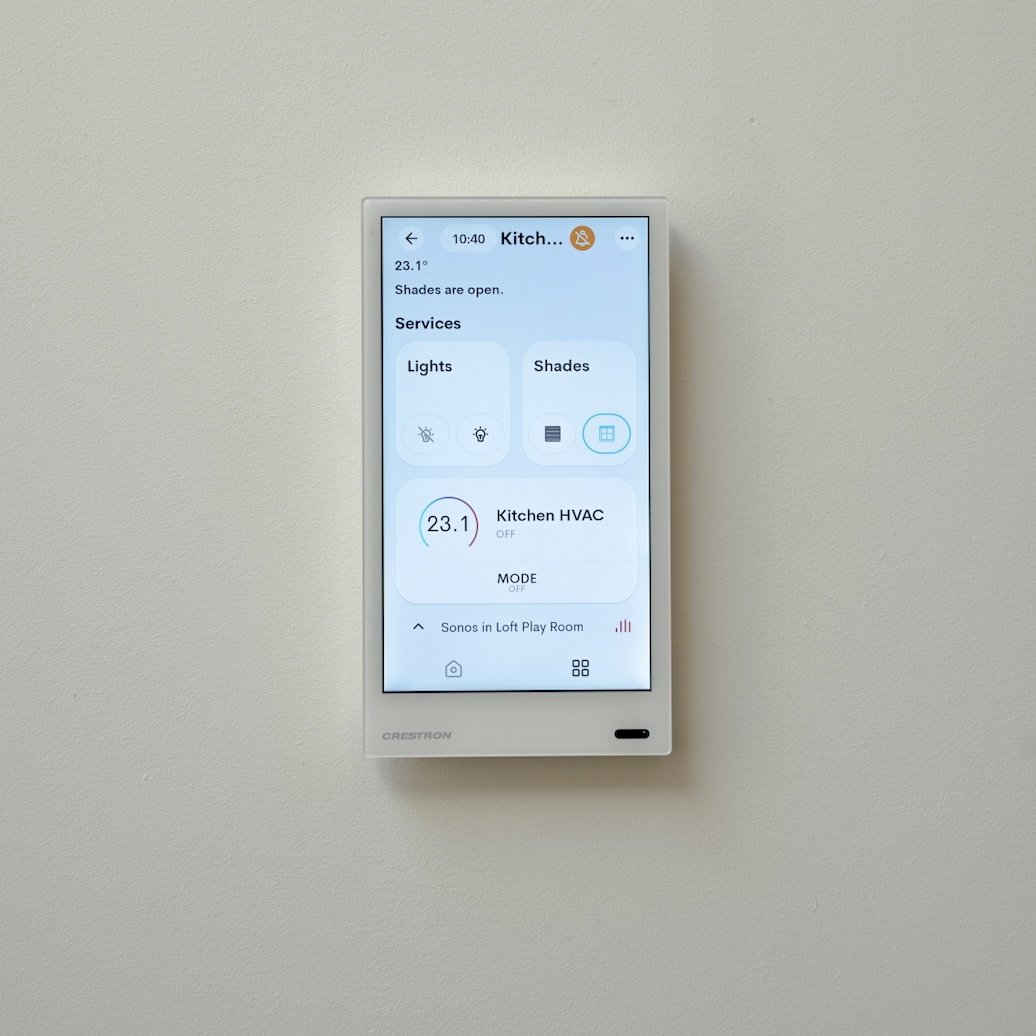
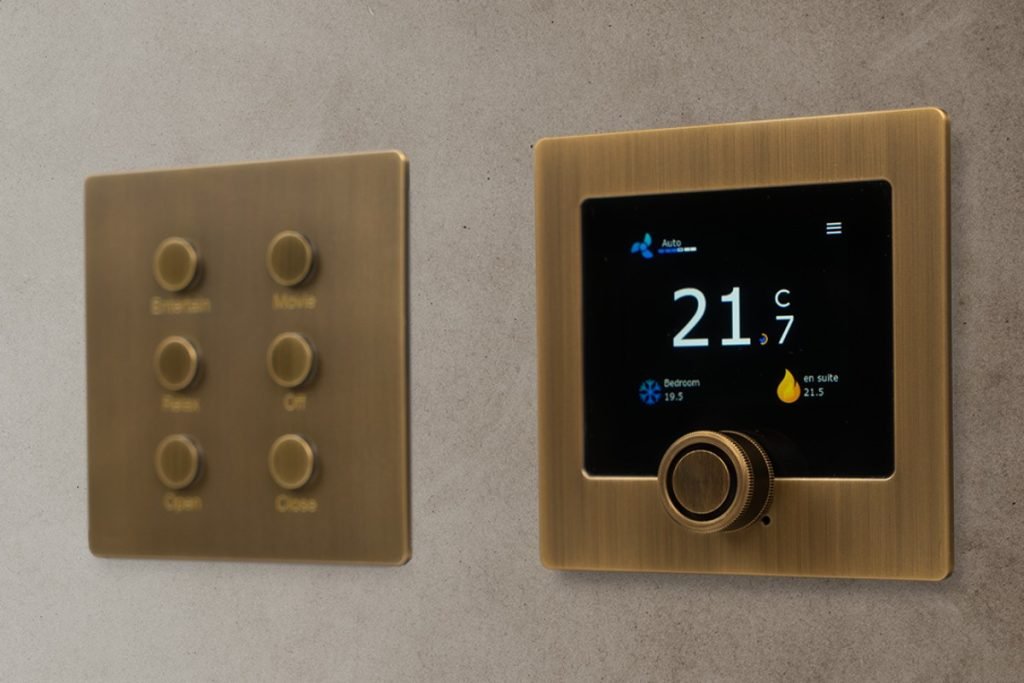
On the future of BMS
CT Again, we’re going to see AI have the biggest impact on BMS in terms of sustainability and delivering the best level of comfort, developing buildings that know occupants’ behaviour and habits at an extraordinary level.
After a day at work, I might come in and put the kettle on. My wife might come in and do something else, and our kids will move around differently. AI can pre-empt what you’re going to do because humans are creatures of habit. It knows what temperature you need the study during your working hours for example.
Until recently BMS was limited to pre-programmed algorithms. Now it has the potential to become a fully intelligent, self-learning property manager, and home technology will soon arrive at a point where it’s thinking for you. This may seem daunting, but the advantages in terms of wellness and wellbeing, sustainability, and asset management is where things get really exciting.
From a control perspective, we want as many M&E systems as possible to be integrated. There can be many disparate systems in large luxury homes, so it’s vital they all work together as one harmonious entity, and this is where BMS really comes into its own.
AP Do you think we’re going to be able to communicate directly with our homes?
CT Absolutely. You can already do this with platforms such as Alexa or Google Home, but these are constrained by predefined rules or ‘routines’. As more advanced AI platforms are embedded within home automation systems we’ll become truly connected with our homes. You can already download AI companions for your phone that genuinely feel like you’re talking to a human. Before long, your home will ask you how your day was when you walk in the door, analyse your mood based on how you reply, adjust the lights and play soothing music, and automatically manage your environment all without you having to think about it.
Understanding whether this is the clients’ desired outcome, however, all starts with earlier design and planning.
Thank you to Chris Thorne for such an enlightening and thought-provoking conversation. Visit Imperium Building Systems for more information on the services they provide, or catch up with our series of articles on AI in architecture.