The BSA: Ensuring Compliance with Gateways 2 and 3
Since its introduction in October 2023, the Building Safety Act has had major repercussions for the construction industry. Implemented in response to the Grenfell Tower disaster in 2017 to improve building safety, it pertains to Higher-Risk Buildings (HRBs) – buildings over 18m in height or those that have at least seven storeys and contain at least two residential units.
The Act includes three mandatory checkpoints – Gateway 1 (planning stage), Gateway 2 (pre-construction) and Gateway 3 (pre-occupation) – which require the principal designer to submit detailed, compliant design plans for approval. While Gateway 1 may not always be a requirement if no external works are included – for an internal apartment fit-out for example – Gateways 2 and 3 in particular have presented significant challenges across the industry, often acting as bottlenecks in the design and construction process.
The Three Gateways
Gateway 1 (Planning Stage): Fire safety must be considered early, often requiring a fire statement with planning applications to ensure site layout and access are safe.
Gateway 2 (Pre-Construction): Replaces the previous "deposit of plans" stage. Work cannot start until the BSR approves the building design, ensuring compliance with Building Regulations.
Gateway 3 (Completion): Final check by the BSR upon completion. A completion certificate is required before the building can be registered and legally occupied.

LA London architect Ema Benzar
LA London architect Ema Benzar was pleased to attend a recent seminar hosted by fire safety and acoustics company Siderise, which included a talk from Ben Oram of the ATLG (the Architectural Technical Leads Group), of which LA London is a member.
The seminar, ‘Supporting designers through Gateways 2 and 3, ensuring compliance’, gave industry professionals the chance to share experiences and best practices for mitigating the negative impact of delays and additional cost on construction projects.
Ema summarise below her key take-aways from the event:
Delays are getting worse
With the number of applications received by the Building Safety Regulator now exceeding the number of applications resolved, approval timelines can run to several months, especially for remediation projects. Seminar attendees cited worst-case approval periods of up to 43 weeks.
This backlog seems to be caused by a massive BSR workload and not enough staff to handle the high volume of applications.
Classifying an HRB, or identifying an independent section within an existing HRB, is challenging
Determining whether an existing building falls within the scope of a Higher-Risk Building (HRB) is not always straightforward, particularly for large and complex developments. Getting this classification wrong can have significant consequences, including rejected applications and programme delays.
An independent section is particularly relevant for larger, existing developments where remedial works are proposed. Some sections may not be classified as a Higher-Risk Building (HRB) even if they form part of one, provided that the section itself meets the criteria for HRB determination. If such a section is identified, it will be managed by the local authority or an approved inspector rather than the Building Safety Regulator (BSR). However, a careful review must be conducted before making this classification to ensure that the building is genuinely exempt.
When a new HRB is designed and constructed, differing heights of independent sections is not so relevant – the building is typically treated as a whole to meet safety standards.
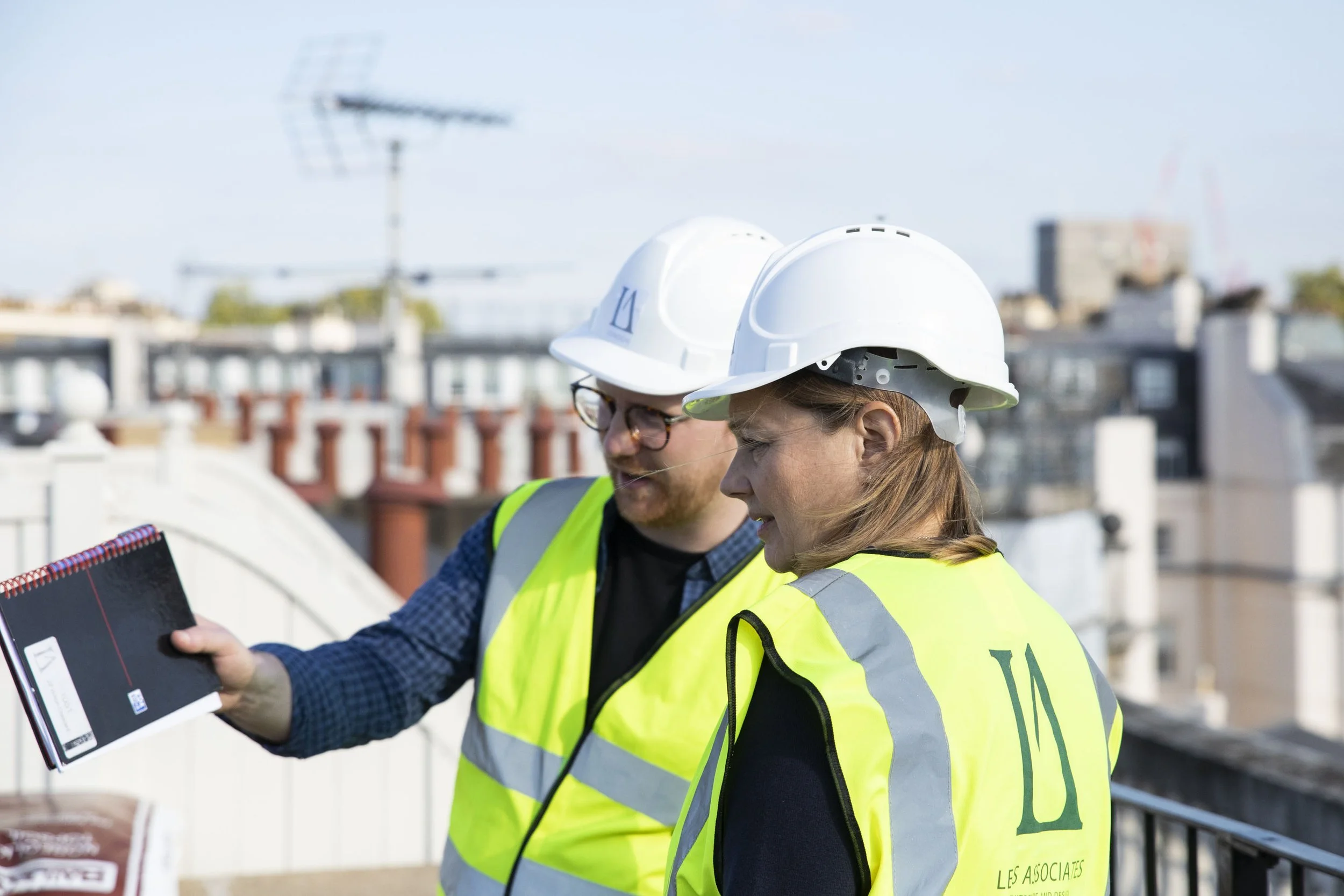
LA London Partners James Hall and Kathryn Archer on site
Engaging with the BSR is also challenging
The BSR has made it clear that it will not give advice before an application has been made. This lack of early dialogue means that issues often only surface at submission stage, when they are more costly and time-consuming to address.
If an application is rejected, the BSR might offer limited advice, but this is not always guaranteed. It might also engage if an ‘approval with requirements’ is made to ask for information, but it will not resolve the project’s uncertainties – it would just clarify what it expects to see as evidence.
This lack of engagement means that teams need to anticipate regulatory expectations without relying on direct feedback. That requires experience, judgement, and a more cautious approach to decision-making during design development.
Gateway 3 can introduce problems late in the day
While Gateway 3 is intended as a straightforward validation of what has been built against the approved design, in reality it frequently exposes issues that were not fully resolved earlier in the project lifecycle. This is particularly noticeable on projects that transitioned into the new regulatory regime partway through construction.
Seminar participants shared their experiences of applications being rejected at a late stage. This adds considerable delay to completion, as well as additional cost and frustration for both the client and the design team.
Clarity is crucial
The importance of clarity and completeness in submissions was a consistent theme of the seminar. Well-structured, coordinated documentation can significantly reduce delays, while ambiguity or inconsistency almost always leads to further queries and slower approvals.
This applies at every level – from how the scope of works is defined, to how technical information is described, to how different documents align with one another. It is no longer enough to be compliant: teams have to demonstrate compliance in a way that is easy to follow and difficult to misinterpret.

LA London Associate Cristian Tudose (L) and Managing Partner Andrew Paulson
Designers need to think like a reviewer
The regulatory body’s workload makes it more likely that an application will be rejected if it is missing information, which could ordinarily be obtained via a simple information request. If an assessor has to spend time working out for themselves exactly what is being proposed or how it meets regulations, the application is much more likely to be rejected.
Successful applications are therefore built around the needs of the assessor, not just the design team. This means structuring submissions logically, making information easy to find, and clearly highlighting compliance rather than expecting it to be inferred. Design teams need to explicitly link evidence, such as a drawing, within the text of the application, specifying the exact location (e.g., "page 10 of document") where the evidence can be found.
Designs need to be at the right level of maturity
At Gateway 2, achieving the right level of design maturity is critical. Absolute certainty is rarely achievable, particularly on complex façade or remediation schemes, but there is a general expectation that designs should be at least around 80-90% complete at Gateway 2.
That remaining uncertainty – often linked to site conditions or elements that can only be confirmed once works begin – is accepted. The difficulty lies in striking the right balance. Submit too early and the risk of rework increases; wait too long and programmes begin to slip.
Projects that balance this effectively – allowing for some uncertainty while avoiding premature submission – tend to progress more smoothly. Early scenario planning and strong coordination across stakeholders also help minimise risks later in the process.
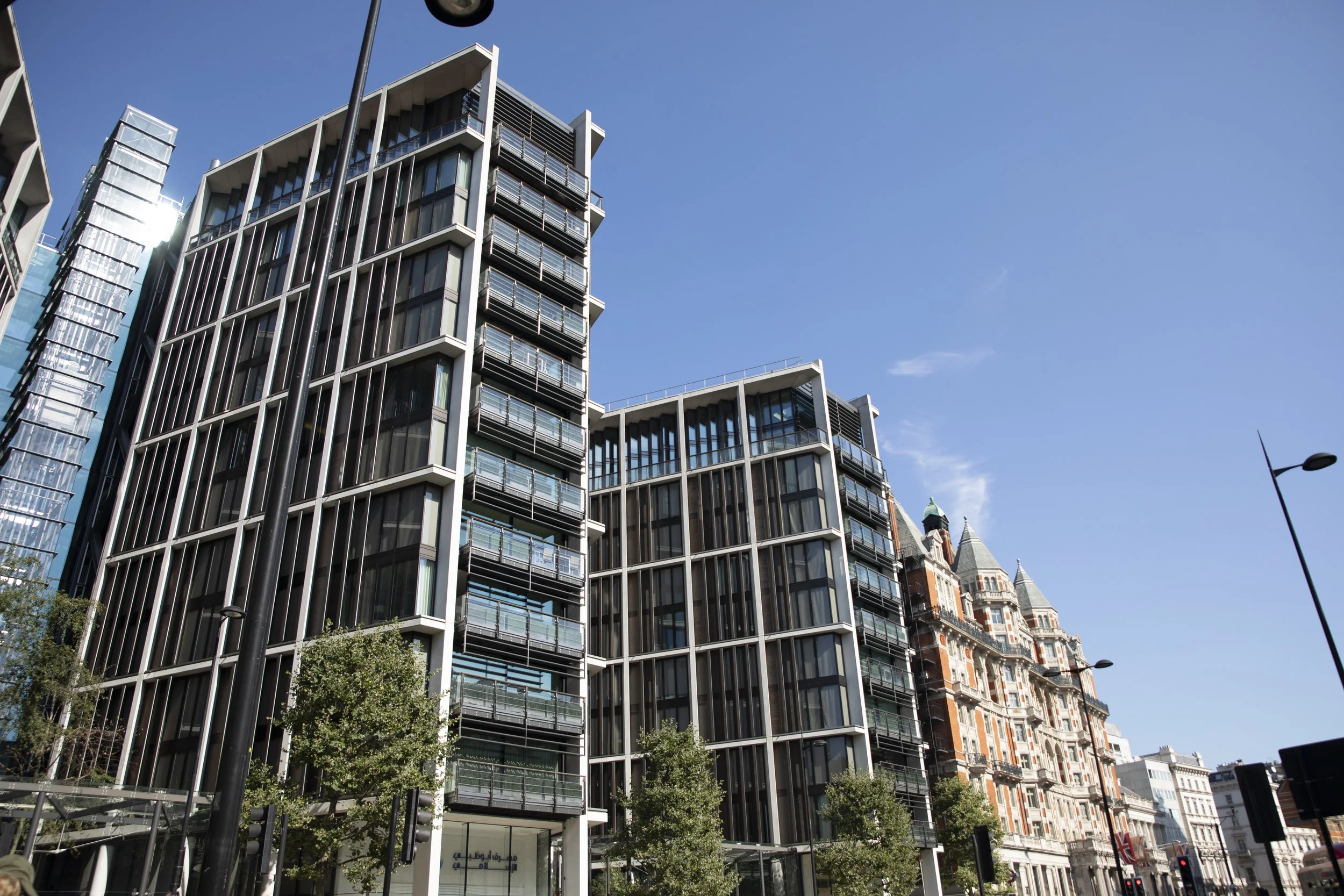
One Hyde Park is a Higher-Risk Building that LA London have extensive experience working in
Regulation 7(2) remains a risk area
Designers need to pay particular attention to Regulation 7(2) of the Building Regulations. This mandates that materials forming part of an external wall or attachment – such as cladding, insulation or balconies – must meet the fire safety stipulations of European Classification A2-s1, d0 or A1 (non-combustible).
Even where designs are otherwise robust, insufficient clarity or evidence around material compliance can undermine an application.
What should change?
There has been some discussion about separating applications for existing buildings from new builds and to have smaller-scale projects, such as the refurbishment of a flat within a high-rise, dealt with by the local authority instead of the BSR. This is a step we advocated in an article about the BSA more than a year ago, and would help to relieve some of the pressure on the regulatory body and ease the backlog of applications.
In the same article, we also highlighted the need for an increase in the number of registered inspectors, especially those qualified to oversee applications on HRBs, to reduce delays in the review process.
What are we doing about it?

Strong, experienced teams like LA London are well placed to navigate Gateways 1, 2 and 3 effectively. We have always followed robust and rigorous documentation processes, and we are continuously working to develop our internal database, which becomes the "golden thread" of project information, to support submissions and avoid costly delays.
We are also following new guidance from the Construction Leadership Council by updating our trackers and all other necessary documents to keep up with changes that occur almost daily. Finally, strong and established relationships with contractors and project collaborators makes it quicker and easier to obtain and share the information that is crucial to ensuring clarity and compliance.
Our clients remain our priority, and we have been clearly outlining the situation with the BSR and its impact on the timeframe and cost their projects. We are grateful to our clients for their understanding that the delays are largely out of the team's hands, and we welcome the recent reforms have made the Building Safety Regulator a standalone, better-resourced and more collaborative body—introducing clearer guidance, staged Gateway 2 submissions, and proactive case management—which is already reducing approval times and improving approval rates for HRBs.